Ndị ọkachamara kwuru na ngalaba nduku nke India abatala n'afọ 2026/27 site na oke ihe ubi, oke mmefu na nchegbu mmiri.
India harvested 59.89 million tonnes of potatoes in 2025/26, yet growers lost money and water scarcity now hangs over planting in Madhya Pradesh and Gujarat. Potato Expert Panel members Deepak Soni (ITC Foods) and Surya Prakash Dwivedi explain what producers and processors should expect.
India harvested a larger potato crop in 2025/26, but growers across the country lost money on it, and water scarcity in Madhya Pradesh and Gujarat now hangs over planting for the new season. Two members of the Potatoes.News Potato Expert Panel, Deepak Soni, Senior Manager – Procurement at ITC Foods, and independent consultant Surya Prakash Dwivedi, set out what producers and processors should expect.
A bigger crop, weaker quality
The second advance estimate of India’s Department of Agriculture and Farmers Welfare puts the 2025/26 potato crop at 59.89 million tonnes, up 2.25% on the 58.57 million tonnes of 2024/25. Uttar Pradesh accounts for roughly 35% of national output. Dwivedi notes that its share of planted area is closer to 30%, so the two figures should not be confused when analysing the market.
Soni says Uttar Pradesh and West Bengal did well on favourable weather and high-yielding varieties, while Karnataka and Maharashtra suffered from irregular rainfall, temperature swings and cyclonic weather. Despite the larger volume, the quality of potatoes suitable for industrial processing “remained a major concern”, with chip parameters below expectations in several regions.
Ụbọchị izu. Wepụ ndenye aha na otu pịa.
Prices below cost
The season was financially painful. Farm-gate prices opened at about ₹7–8 per kg and fell as arrivals grew, Soni reports; cold storage added roughly ₹3 per kg that many growers could not recover even at the farm-gate price. Dwivedi gives a wider opening range of ₹10–12 per kg in some producing regions and stresses that realisations depend on variety, quality, processing suitability and local procurement demand. Both agree the ₹3 per kg storage figure is a fair industry benchmark for a full storage cycle.
Fertiliser costs rose at the same time, with supply constraints for products other than urea, so farmers were squeezed from both sides: weak realisations and rising input costs. “The overall economics of potato cultivation has remained unfavourable,” Soni says.
Water and the 2026/27 planting
Groundwater depletion, higher daytime temperatures and deficient rainfall are already shaping planting decisions in the Malwa belt of Madhya Pradesh and in areas north of Idar in Gujarat, both important suppliers of processing-grade potatoes. Dwivedi expects groundwater dependency and irrigation costs to make efficient irrigation and micro-irrigation increasingly important.
Soni expects lower acreage in drought-affected areas during the 2026/27 rabi season, but points to a counter-factor: seed prices are at record lows and farmers hold large stocks of retained seed, which could encourage planting despite weak economics. The real picture, he says, will be clear only by mid-December. Delayed sowing in West Bengal after cyclonic activity in the Bay of Bengal could also shift the harvest calendar and market arrivals.
Nhazi na mbupụ
Gujarat has become India’s hub for potato processing and export-oriented production of French fries and flakes, shipping to Nepal, Bangladesh, the Middle East and South-East Asia. Soni sees an additional opening in Europe, where a smaller crop could leave processors short of raw material. At home, smaller processors, which account for about 12–15% of processing-potato consumption, face inflation in packaging, edible oil, fuel and labour and cannot pass the full increase to consumers.
Contract farming prices for the new season are up by about ₹1–1.5 per kg, reflecting higher procurement expectations. Soni’s indicative price outlook for 2027 is ₹15–16 per kg for processing-grade potatoes and ₹12–14 per kg for fresh consumption; he stresses these are market expectations, not assured prices, and will depend on weather, yields, storage inventories and export demand.
GỊNỊ mere o ji gbanwee
- Ndị na-akọ ihe: the loss-making 2025/26 season and cheap retained seed pull in opposite directions; planting intentions by mid-December will decide the 2027 market.
- Nhazi: raw-material quality, not volume, is now the constraint, and contract prices are rising.
- Azumahia: Indian fries and flakes exporters are positioning for European demand while domestic processing demand stays subdued.
Soro mkparịta ụka ahụ
Two experts have given their reading of the season. The Indian potato industry is larger than any two views, and the questions raised here deserve more voices: growers in Uttar Pradesh and West Bengal who lived through this year’s prices, cold-store operators, seed producers, processors and exporters in Gujarat and Madhya Pradesh, and researchers at ICAR-CPRI and the state universities.
Do you see the same picture in your region? Is ₹7–8 or ₹10–12 per kg closer to what farmers actually received at the gate? Will cheap retained seed keep acreage up despite the water shortage? What should the processing industry change in its contracts to keep growers in potatoes?
The Panel Ọkachamara Nduku exists so that the industry can discuss its own season in its own words, not through second-hand reports. If you work in the Indian potato sector and would like to add your view, reply in the comments below or write to v.kovalev@poteto.news with the subject “India”. Substantive replies will be published as follow-ups with full attribution, and specialists who wish to take part on a regular basis are invited to join the Panel.
Sources: Deepak Soni, ITC Foods, written reply to Potatoes.News, 5 November 2026; Surya Prakash Dwivedi, written reply to Potatoes.News, 6 November 2026; Department of Agriculture and Farmers Welfare, Second Advance Estimates 2025/26, as reported by AgroSpectrum India, Rural Voice and DD India.
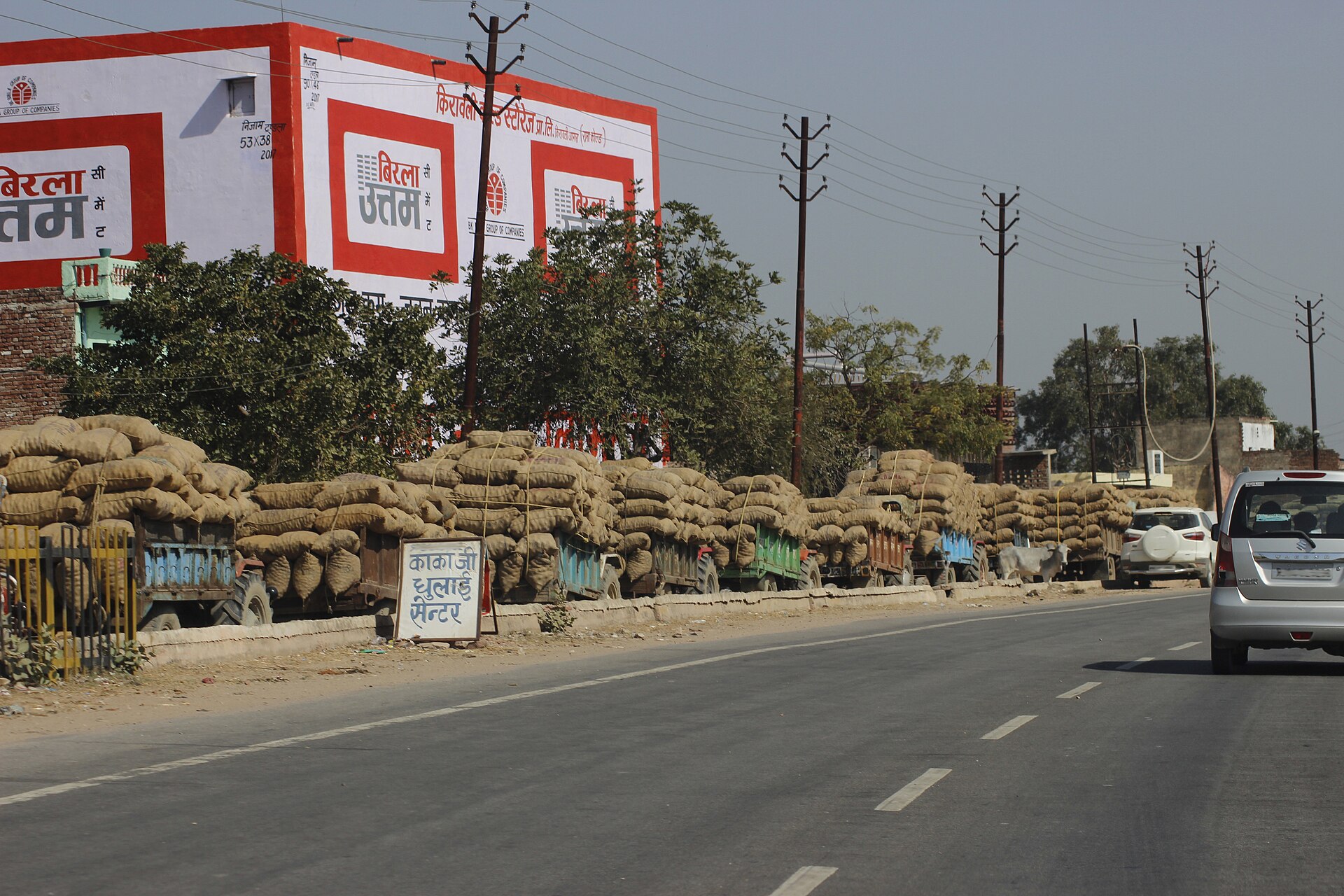
Photo: Potatoes being taken to a cold store in India (illustrative). Suyash Dwivedi / Wikimedia Commons, CC BY-SA 4.0.